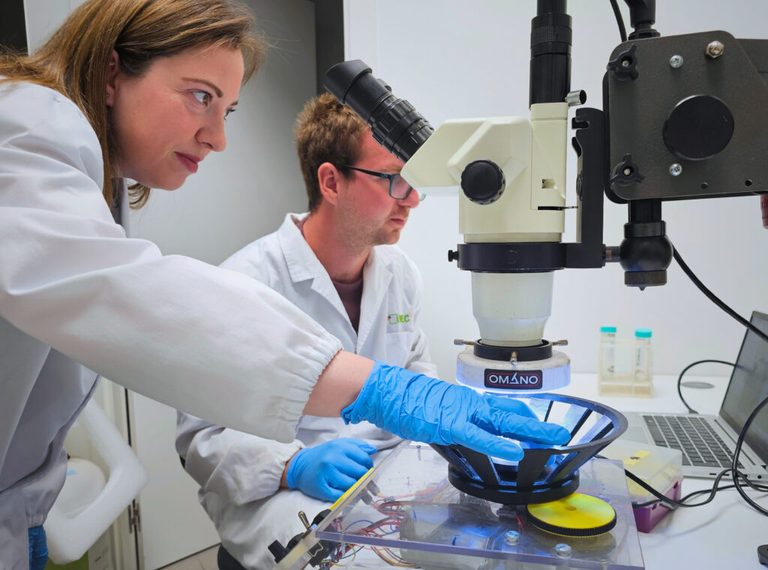
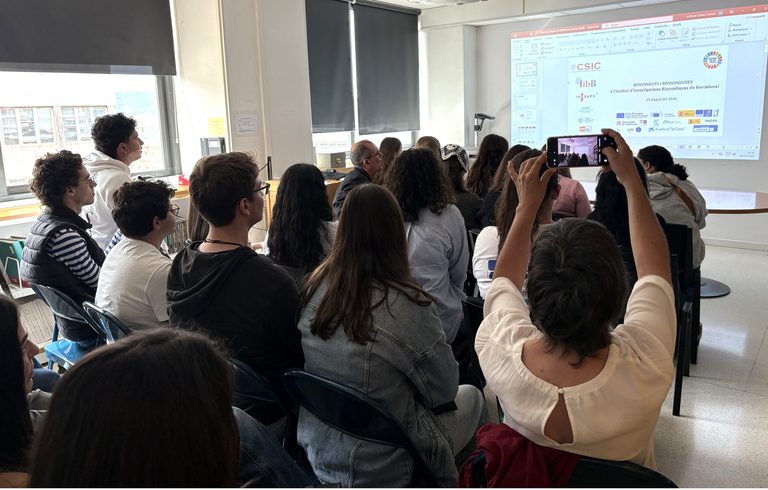
For one more year, PHOTOTHERAPORT researchers joined the European Researchers’ Night, reaching out to the general public and bringing the science behind photopharmacology closer to society. This year, we counted on the participation of activities from LIOS and IBEC.
European Researchers’ Night is a large-scale public event held simultaneously in numerous cities across Europe. It offers a unique opportunity for researchers to showcase their work and demonstrate how scientific research contributes to society and everyday life through accessible, interactive, and engaging activities. The initiative aims to bring research closer to citizens, encourage curiosity about science, and promote research careers among younger generations. In addition, the event serves as a platform to highlight excellence in research and innovation at both European and international levels. Each year, it attracts approximately 1.5 million participants, fostering dialogue between researchers and the wider public and celebrating the value of scientific knowledge. This year, PHOTOTHERAPORT researchers once again took the opportunity to hold activities and bring the project closer to society.
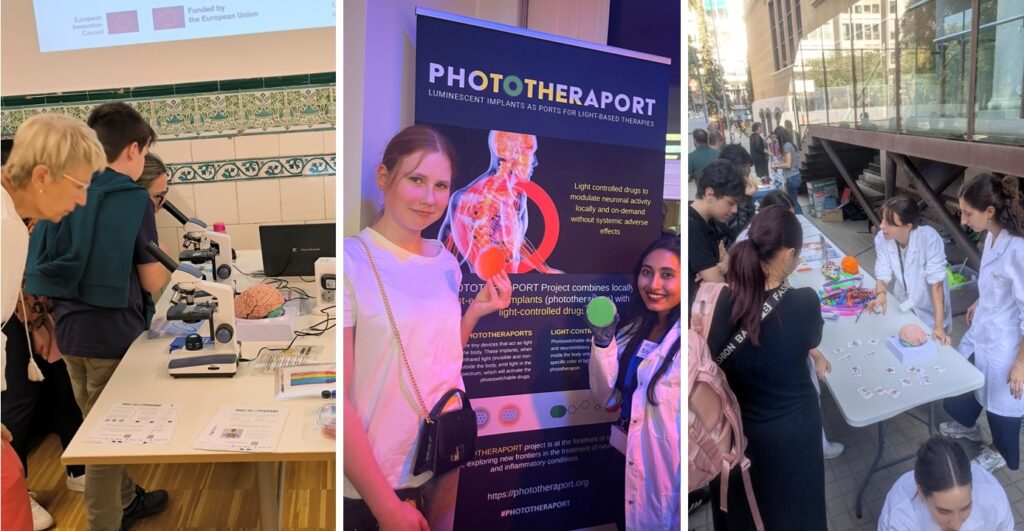
The first activity has carried out the 23 September by Nayeli Fernández, PhD student at Pau Gorostiza’s lab. and Bia Moreno, communication officer responsible for the project communication, both from IBEC in Barcelona. The activity, titled “What are photoswitchable drugs and how light can help solve health problems”, began with a short presentation followed by a hands-on activity oriented mainly to adults. The workshop explored the fascinating world of drugs that can be activated by light inside the body, allowing treatments to be precise, localized, and more efficient, while minimizing side effects.
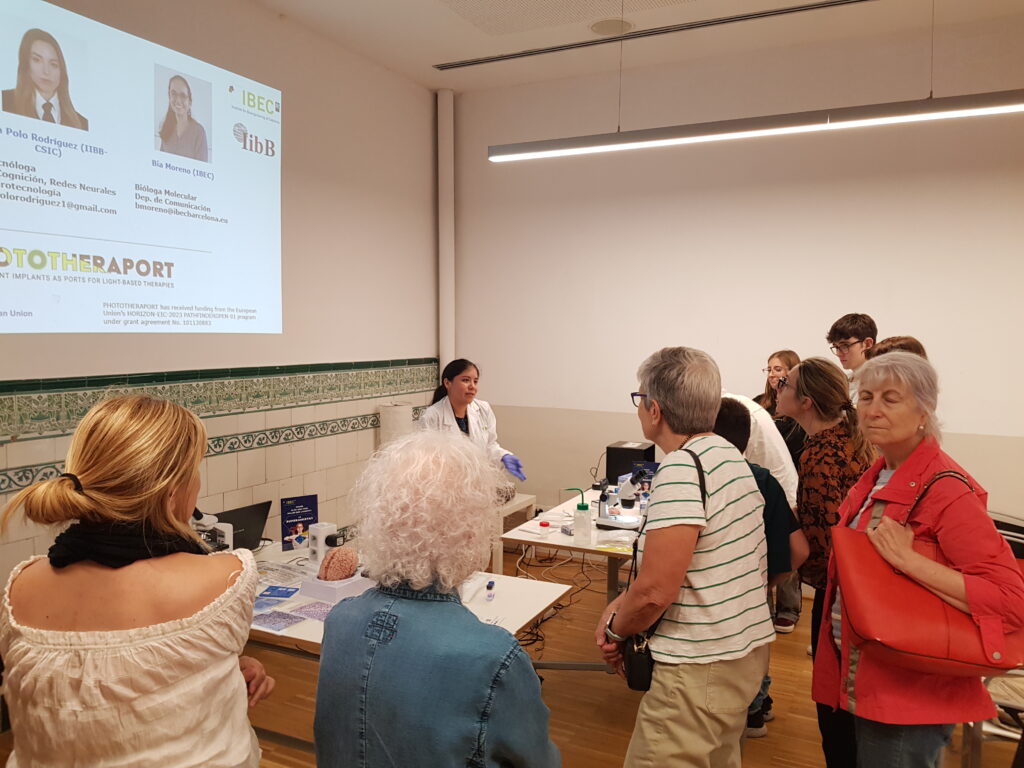
About 25 participants learned how combining light-emitting implants with light-sensitive drugs opens new possibilities for treating brain and nervous system conditions, such as localized pain and epilepsy. They saw demonstrations of nanomaterials that respond to infrared light in green, blue, and red, including interactive models simulating “tiny light bulbs” that activate photoswitchable drugs in specific areas. Visitors were also able to observe samples of neurons and mouse brain under the microscope, and to see and manipulate a life-size model of the human brain to learn about its different parts and functions while comparting it to a real lamb’s brain. Additionally, attendees could observe samples from the hippocampal region of the mouse brain under a microscope while listening to an audio recording of hippocampal activity. Such recordings are obtained during experiments that involve the implantation of electrodes.
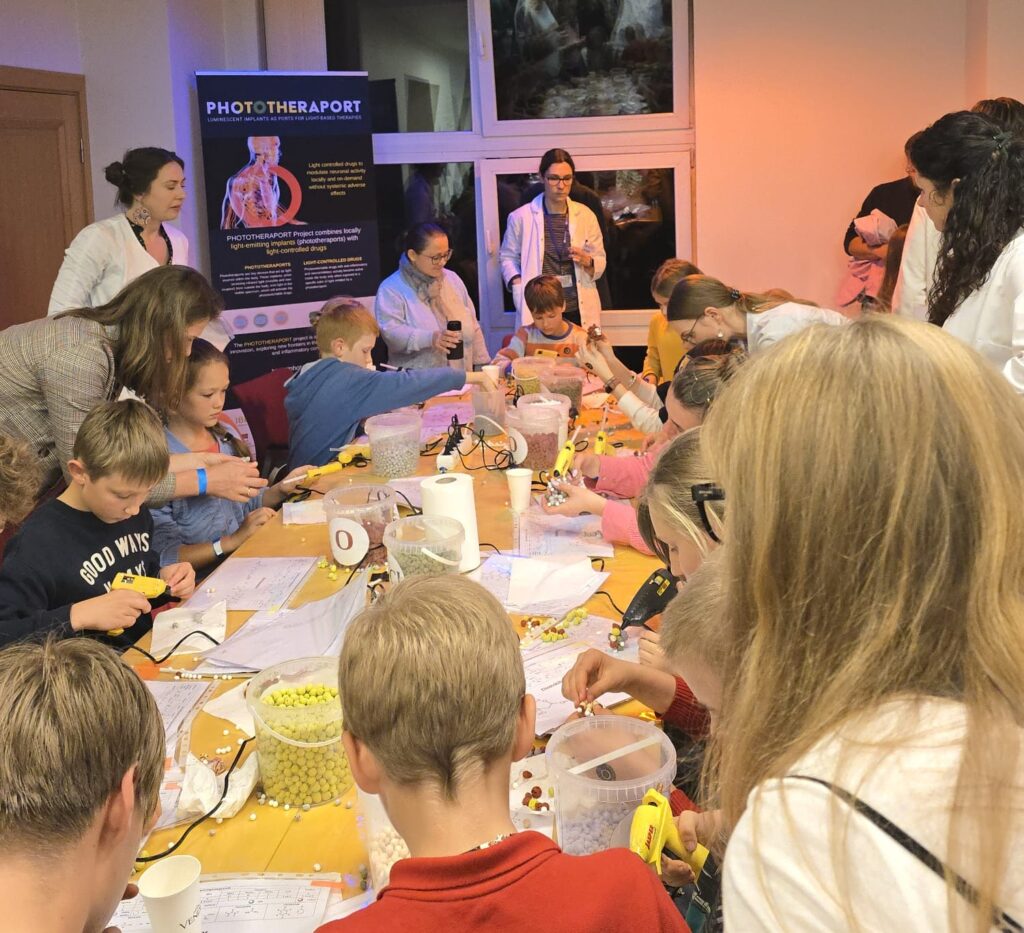
On Friday, 26 September 2025, it was the turn of the Latvian Institute of Organic Synthesis (LIOS), that opened its doors to the public for Researchers’ Night, receiving almost 1,600 visitors. Among the 14 workshops and activities proposed, guests had the chance to step inside chemist laboratories and try experiments themselves, discover the fascinating world of a bacteriology laboratory and explore molecular structures through computer modeling. One of those activities was carried out by researchers from Rossella Castagna’s lab from PHOTOTHERAPORT project (Shapla Bhattacharya, Alessio Perazzoli and Leonid Rozanov). They engaged in discussions with the adults regarding the project and also carried out activities with the kids, totalling 350 visitors. They hosted two events designed to turn science into a memorable experience. The “tattoo salon” invited guests to discover the beauty of molecules through artistic and science-inspired designs, while the “photo booth” offered a playful exploration of light, colour, and photochemistry through creative photography. In addition to the fun, there were engaging discussions about the PHOTOTHERAPORT project itself, offering visitors deeper insight into the research and helping bridge the gap between science and society.
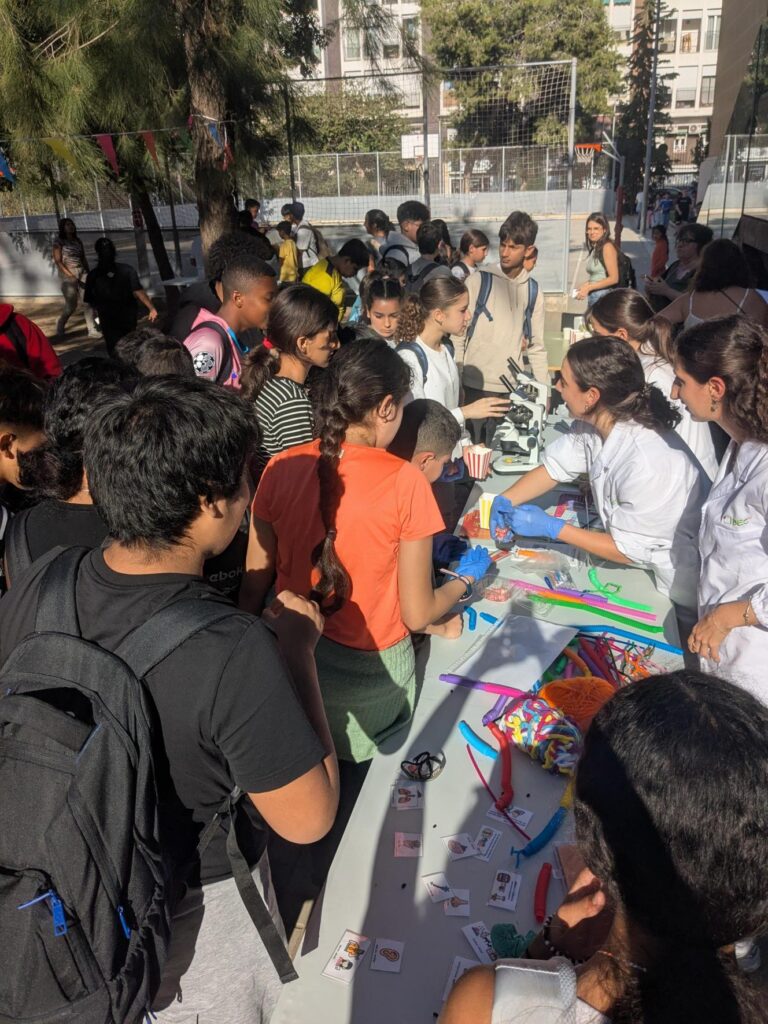
Finally, on 30 September, Luisa Camerin and Sonia Ortega, both researchers at the IBEC, went to the Lluis Vives School in Barcelona to carry out a workshop about the brain and the nervous system, open to all the school. About 100 students came around to the PHOTOTHERAPORT stand and learned how the information travels in our body until reaching the brain and how the brain responds. They got to know what a nervous stimulus is, how the nervous system function to transmit the information to the brain, and how the brain coordinates all that happens in our body. In addition, visitors had the opportunity to study neuron samples and mouse brain tissue under a microscope and to manipulate a life-size model of the human brain. Through comparison with an actual lamb’s brain, they learned about the different regions and functions of the human brain.
PHOTOTHERAPORT project was also showcased on the Catalan website of the European Researchers’ Night, which offers information about several European projects being carried out in the region. To access this website (in English) click here.