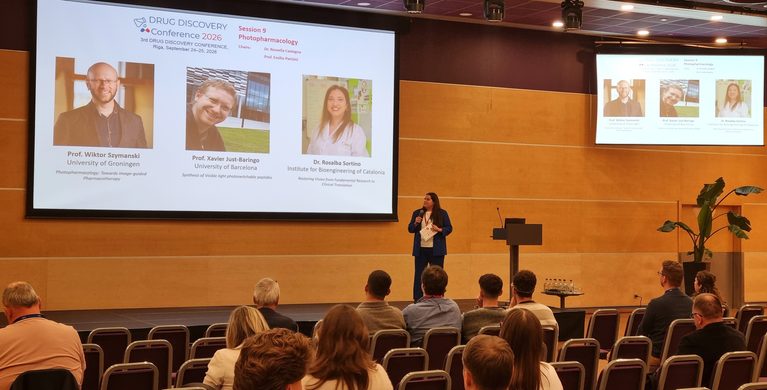
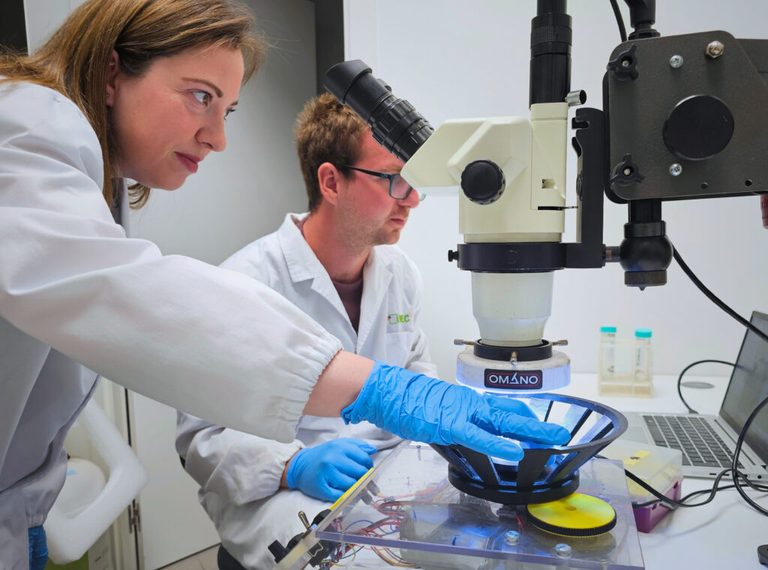
Researchers from the PHOTOTHERAPORT project recently took part in two major science outreach events in Barcelona, introducing audiences of different ages and backgrounds to the emerging field of photopharmacology and its potential to transform the treatment of neurological and sensory disorders.
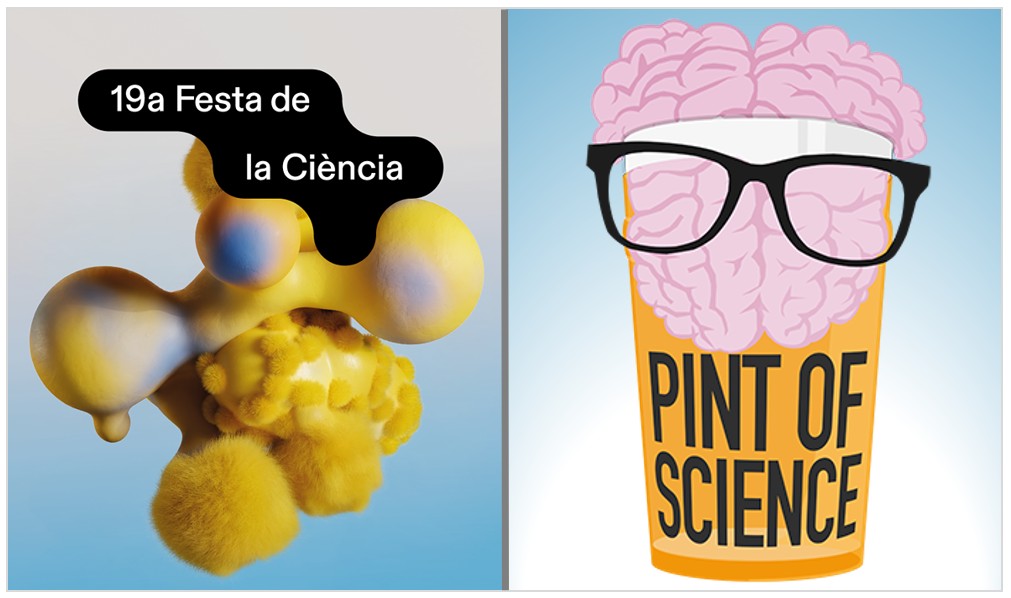
As part of its commitment to bringing science closer to society, PHOTOTHERAPORT researchers participated in two science communication events in Barcelona during spring 2026, engaging the public with the latest advances in photopharmacology and light-based therapies.
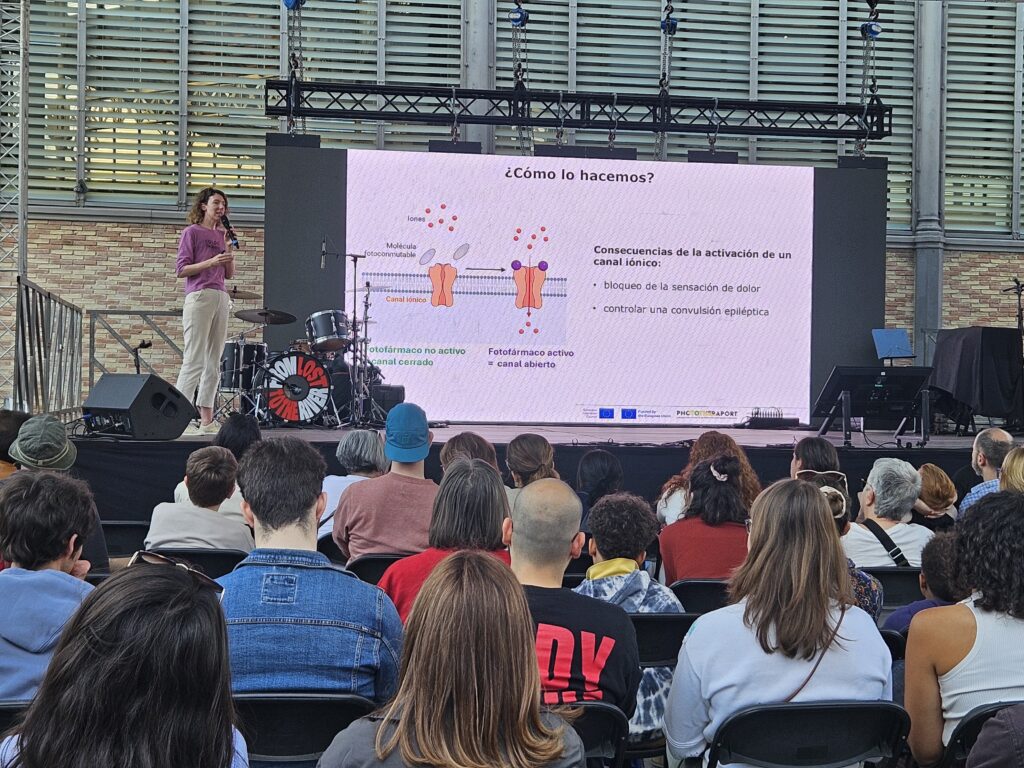
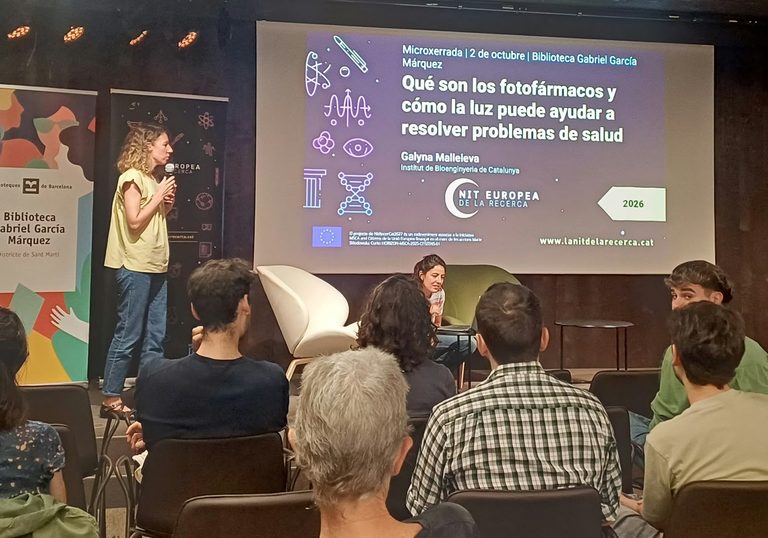
The first activity took place during the 19th Science Party (“Festa de la Ciència”), held in Barcelona from 17 to 19 April 2026. The event, one of the city’s largest science outreach initiatives, brings together researchers and citizens through talks, workshops and hands-on activities designed to make science accessible to all audiences.
Researcher Galyna Malieieva, from the Nanoprobes and Nanoswitches group at IBEC, led by Pau Gorostiza, coordinator of the PHOTOTHERAPORT project, delivered a micro-talk entitled “What are photoswitchable drugs and how can light help solve health problems?” to an audience of approximately 90 people.
During her presentation, Malieieva introduced the concept of photoswitchable drugs, whose activity can be controlled using light. She explained how these compounds could be combined with miniature light-emitting implants capable of converting externally applied infrared light into visible light within the body. This innovative approach would allow treatments to be activated only where and when needed, increasing therapeutic precision while reducing unwanted side effects.
The talk also highlighted how the technologies being developed within PHOTOTHERAPORT could contribute to new treatment strategies for conditions such as chronic pain, epilepsy and vision disorders.
One month later, on 19 May 2026, PHOTOTHERAPORT research reached a different audience through participation in Pint of Science, the international festival that brings scientific discussions into informal settings such as cafés and bars.
On this occasion, Luisa Camerin, also a researcher in the Nanoprobes and Nanoswitches Group at IBEC, delivered the talk “photoswitchable drugs: medicines that work with light” to around 20 adults attendees at a bar in Barcelona.
Camerin presented the principles of photopharmacology, explaining how photosensitive molecules can act as molecular switches that alter a drug’s biological activity when exposed to specific wavelengths of light. This level of control makes it possible to activate treatments at precise locations, times and intensities, opening new therapeutic opportunities while minimizing systemic effects.
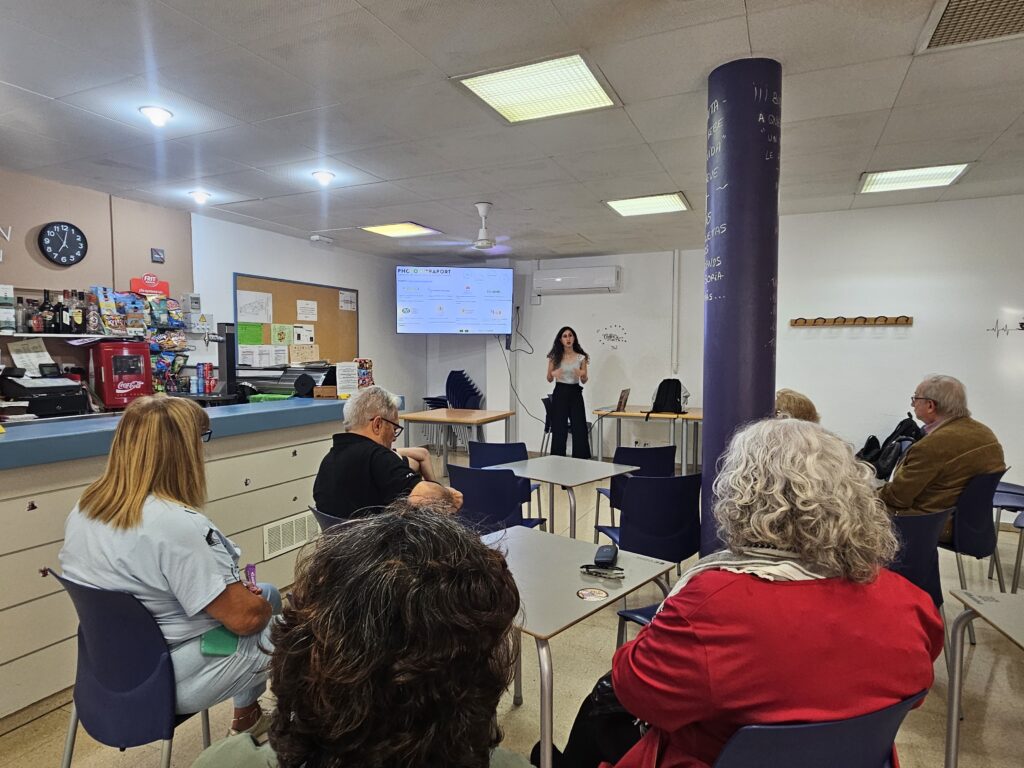
Through accessible examples and discussion with participants, the talk offered an engaging introduction to a rapidly evolving field with potential applications in pain management, epilepsy and visual impairments, among other medical challenges.
By participating in both events, PHOTOTHERAPORT researchers continue to strengthen the dialogue between science and society. These outreach activities play an important role in raising awareness of innovative light-based therapies and inspiring public interest in the scientific advances that may shape the future of medicine.