On 28 and 29 October, the PHOTOTHERAPORT consortium met in Riga, Latvia, for the project’s final meeting, hosted by the National Institute of Research and Innovation (NIRI). Over a day and a half, partners reviewed progress towards the project’s final objectives, discussed the latest scientific results and remaining activities, and explored future funding opportunities. They also visited NIRI’s recently built laboratories.
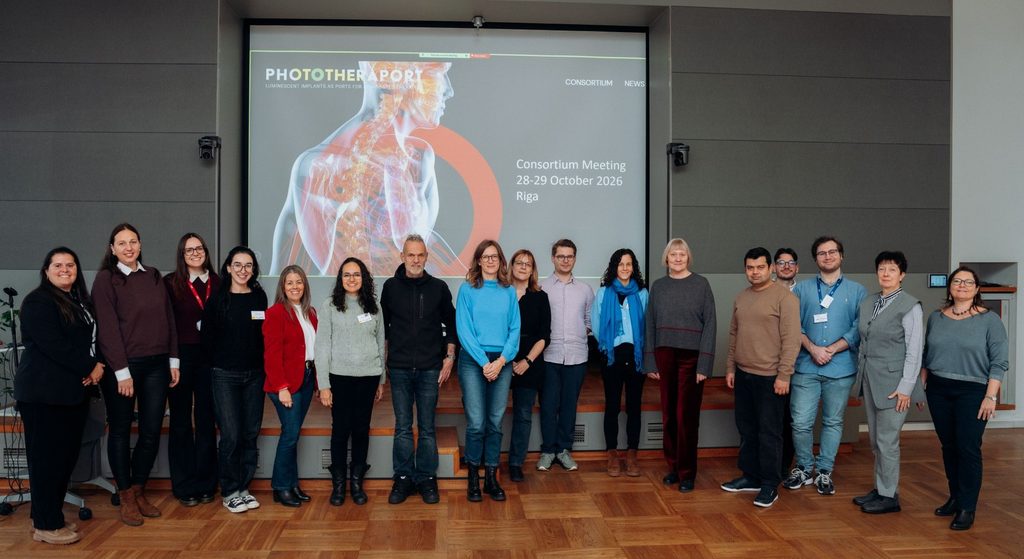
Almost three years after the kick-off meeting held at the Institute for Bioengineering of Catalonia (IBEC) in Barcelona in January 2024, the PHOTOTHERAPORT team came together one last time to take stock of the project. The final meeting took place at the premises of NIRI’s Teika Science Centre (formerly the Latvian Institute of Organic Synthesis) in Riga. It brought together researchers from IBEC, NIRI, Rīga Stradiņš University (RSU), Tampere University (TAU), the Institut d’Investigacions Biomèdiques de Barcelona (IIBB-CSIC), the University of Cádiz (UCA) and the Teamit Institute, with some participants joining online. Unfortunately, Technion – Israel Institute of Technology partner could not attend.
Since its launch, PHOTOTHERAPORT has been developing a photopharmacology strategy that combines two technologies. The first is light-emitting implants, or PhotoTheraPorts, which convert near-infrared light into visible light. The second is photoswitchable drugs that only become active when illuminated. Together, they aim to treat neuropathic pain and epilepsy locally and on demand. The final meeting was an opportunity to look back at how far this approach has come and to plan what will happen beyond the end of the project.
Day 1: management, data and the road ahead
The meeting was officially opened Wednesday afternoon by Dr. Osvalds Pugovičs, Director of NIRI’s Teika Science Centre, one of the institute’s two science centres, who welcomed the partners to Riga. Following that, Giulia Ruzzene, PHOTOTHERAPORT project manager at IBEC also welcomed the attendees.
Giulia Ruzzene and project coordinator Pau Gorostiza (IBEC) then presented the overall status of the project and its progress towards the final objectives. An update on scientific coordination and project management (WP6) followed.
Fidel Bellmunt (IBEC) reviewed the project’s data management: the Data Management Plan, repositories, publications and the requirements for final reporting. After a short break, the coordination team and all work package leaders went through the tracking of the final deliverables. The first day closed with a session on future funding opportunities and follow-up projects that could build on the results achieved in PHOTOTHERAPORT.
In the evening, partners met for a consortium dinner in the centre of Riga, a chance to celebrate nearly three years of joint work in a more informal setting.
Day 2: science, communication and exploitation
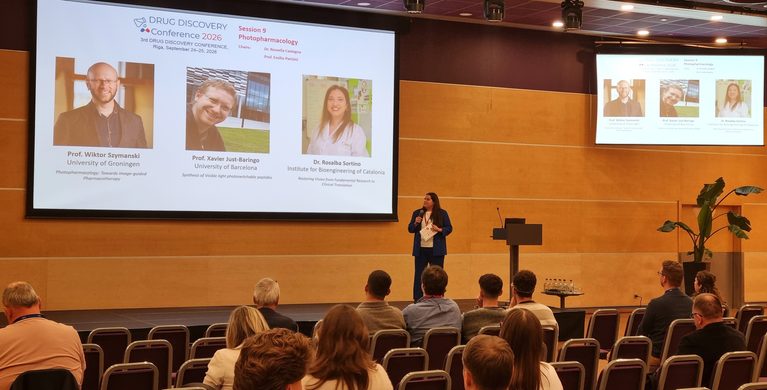
Thursday was mostly devoted to the scientific results of each work package. Rossella Castagna (NIRI-Polimi) and Laeticia Petit (TAU) opened the day with WP1, on the development of PhotoTheraPort implants based on upconverting nanoparticles. These light-emitting platforms are at the core of the project, and this line of research recently received the Best Poster Award at the 3rd Drug Discovery Conference, also held in Riga. Pau Gorostiza then presented the progress of WP2 on photoswitchable neuroinhibitory drugs. The presentations continued with the communication and dissemination achievements of the project, presented by Bia Moreno (IBEC), and the regulatory aspects of the project, presented by Irene Pazos (Teamit).
After lunch, Sonia Torres (UCA) followed with WP3, which evaluated the efficacy of the implants and drugs in inhibiting pain at the peripheral and spinal cord level in vivo. Victoria Puig (IIBB-CSIC) presented WP5 and the latest results of the project technology applied to epilepsy, focusing on the in vivo photopharmacological neuroinhibition of brain hyperactivity involved in focal seizures.
The last scientific presentation was held by Valerija Groma (RSU), who presented results on WP4, with the identification of regions mainly involved in focal seizures and pain in human brain slices. A final discussion led by Giulia Ruzzene and a scientific integration discussion bringing together all scientific WPs brought the meeting to an end.
A visit to NIRI’s new laboratories
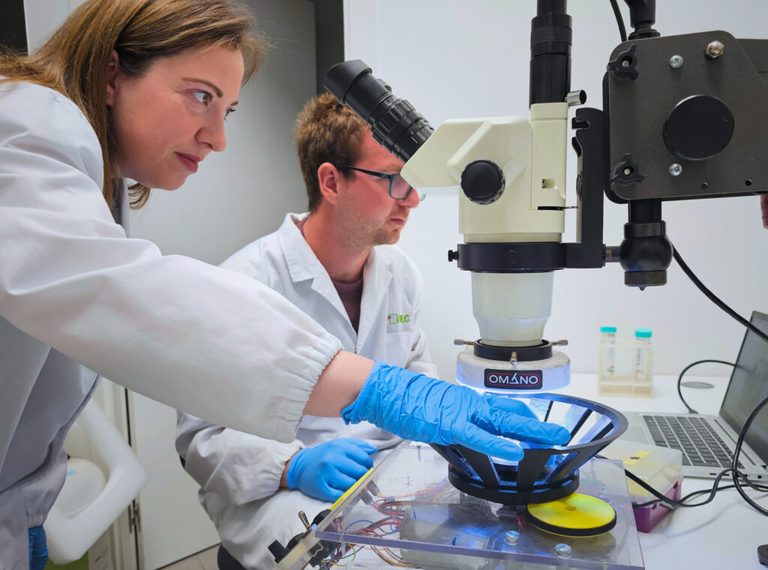
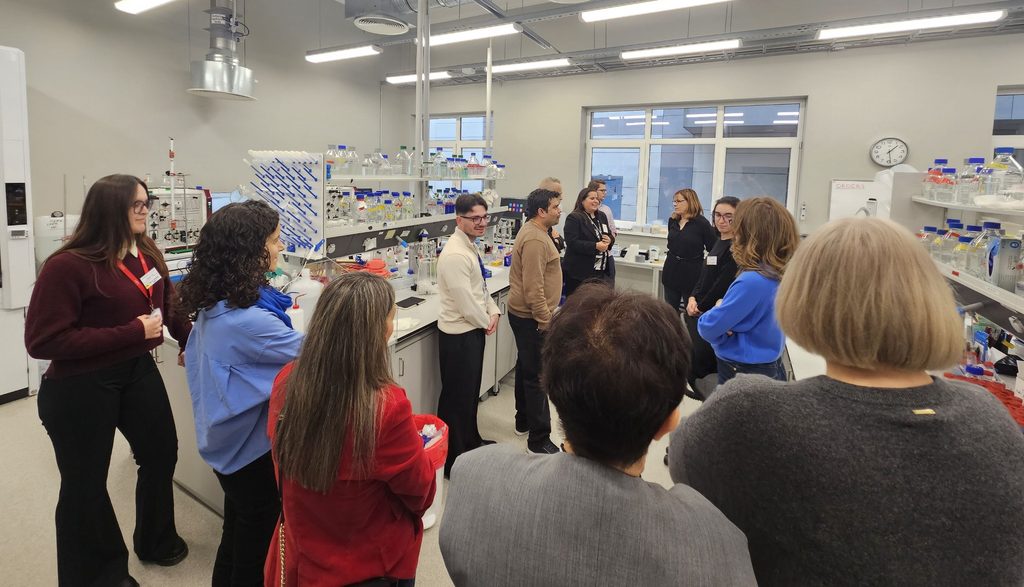
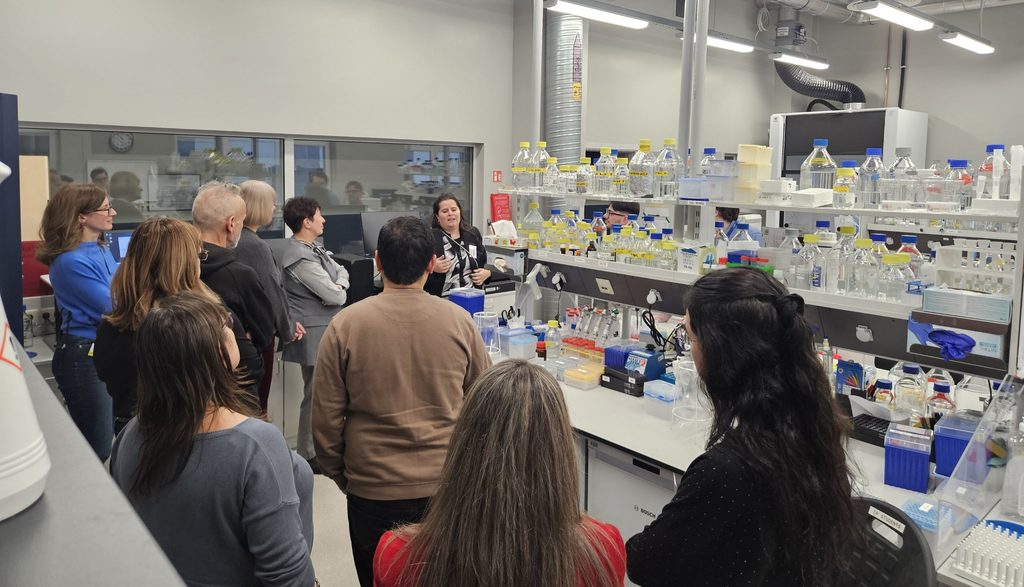
During the second day, participants also toured NIRI’s facilities, including the recently built laboratories of the institute’s Biotechnology Group held by Emilio Parisini and set up with the support of Rossella Castagna. The group investigates and engineers proteins at the molecular level, integrating structural biology, biochemistry, biophysics and molecular biology. Its research focuses on enzymes with novel or enhanced functionality, sustainable solutions for plastic recycling, advanced diagnostic technologies and precisely controllable molecular tools for biomedicine and environmental sustainability. Within the group, Rossella Castagna brings together materials science and photopharmacology, studying adhesion proteins with light-based approaches and developing photoactive materials. This expertise has contributed to the development of the PhotoTheraPort implants within the project. The visit gave partners a first-hand look at these research spaces and a chance to talk with the local team.
The meeting in Riga marked the end of a journey that began in Barcelona almost three years ago, with partners from different disciplines working together on light-based therapies. Beyond reviewing results, it allowed the consortium to discuss how to keep this collaboration going and how to take the knowledge generated within PHOTOTHERAPORT forward in future projects. The consortium warmly thanks NIRI for hosting this final meeting.